Blog

FEATURED

Wultra Raises €6.8 Million in Series A Funding to Accelerate Global Expansion of Post-Quantum Digital Identity Solutions

Wultra, a provider of post-quantum authentication and digital identity solutions for banks and fintechs, announced the completion of a €6.8 million Series A funding round. The company helps financial institutions replace legacy authentication methods with phishing-resistant, post-quantum technologies that improve security and user experience. The investment round was backed by lead investor Seventure Partners, followed by ARIADNEXT founders Marc Norlain and Guillaume Despagne and existing investors J&T Ventures and Elevator Ventures.

Passwordless Authentication in Banking: A Guide to FIDO2 & Passkeys (2026)

Passwordless authentication is already part of modern banking, even if it is not always explicitly labeled as such. In many markets, strong customer authentication (SCA) and multi-factor authentication are well established, and passwords rarely function as a standalone control.

Can FIDO2 Be Bypassed? How to Mitigate the Risk with Talisman

FIDO2 is one of the most significant advances in authentication security in a generation. It eliminates many of the attacks that defined a decade of banking fraud, particularly phishing and credential theft.

Modernizing Legacy Authentication: A Practical Roadmap to Quantum-Safe Security

At Finovate London, Wultra's Regional Lead for Digital Identity Amal Nazar walked through what it actually takes to modernize legacy authentication for a post-quantum world, and why the window to do it properly is getting shorter every year.

India’s Shift to Dynamic Authentication: Understanding the RBI’s New 2FA Rules

India’s latest update to digital payment authentication signals a shift in how trust is established in large-scale financial ecosystems. With enforcement starting in April 2026, the Reserve Bank of India is reinforcing two-factor authentication while clearly encouraging a move toward dynamic, transaction-bound security.

Malaysia Raises the Bar on Authentication: Executive Summary of the New RMiT Update

Malaysia’s updated RMiT policy shifts authentication from guidance to enforceable standards, requiring phishing-resistant, device-bound methods. It reflects a broader move toward continuous, risk-based security tied to real-world fraud threats.

5 Proof Points That the Timing Is Right for Post-Quantum Authentication

Post-quantum authentication is no longer theoretical. It is becoming a practical requirement for organizations that rely on cryptography to protect digital services, customer identities, and long-lived data. Advances in quantum computing mean that the security assumptions behind today’s cryptographic systems may not hold for the full lifetime of systems being deployed now.

The ‘Harvest Now, Decrypt Later’ Impact on Authentication: Are Passwords Safe from Quantum Threats?

Interestingly, some of the less secure — or even outright legacy — authentication methods appear to be less affected by quantum threats than their modern, cryptography-based counterparts.

Wultra Opens Singapore Office to Support Post-Quantum Security Growth

We’re excited to announce the opening of Wultra’s new office in Singapore — our first location in Asia. This step strengthens our support for banks and fintech companies, especially across Southeast Asia as they prepare for the post-quantum era and the next generation of secure digital authentication.

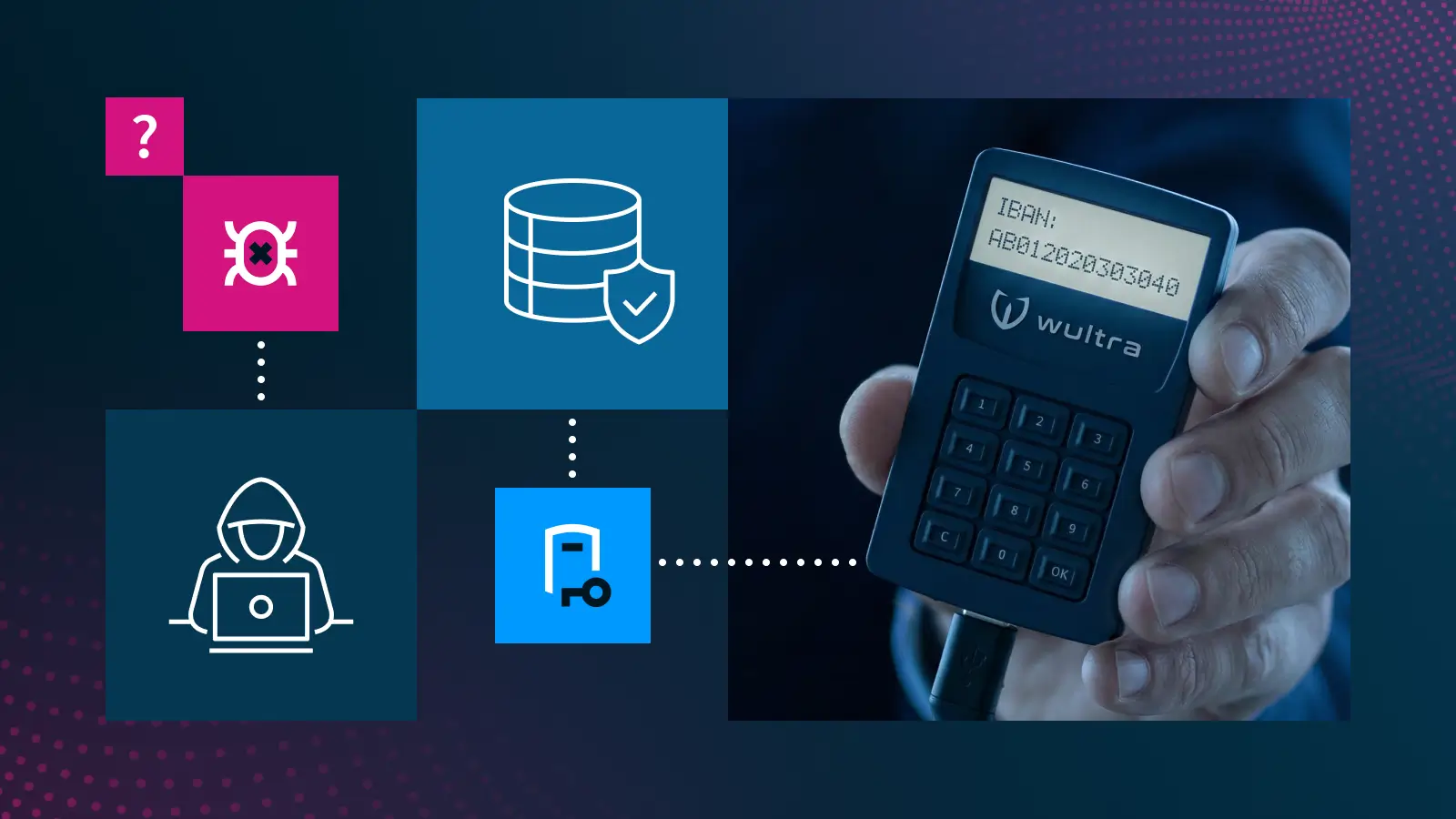
Three Reasons Talisman Is an Excellent Strong Customer Authentication Alternative for Users (and Banks)

The upcoming PSD3/PSR1 regulation introduces stricter requirements for Strong Customer Authentication (SCA). One of the most notable changes is the requirement to provide authentication methods that do not depend on smartphone possession.

UAE Banks Must Act: SMS OTPs Will Be Gone by 2026

The Central Bank of the UAE has made it clear: by 2026, financial institutions must eliminate SMS one-time passwords (OTPs). This regulation is reshaping the authentication landscape for banks across the region, and the time to prepare is now.

Thank you! Your submission has been received!
Oops! Something went wrong while submitting the form.